
The Ultimate Showman
Remembering Ozzy Osbourne (1948-2025)

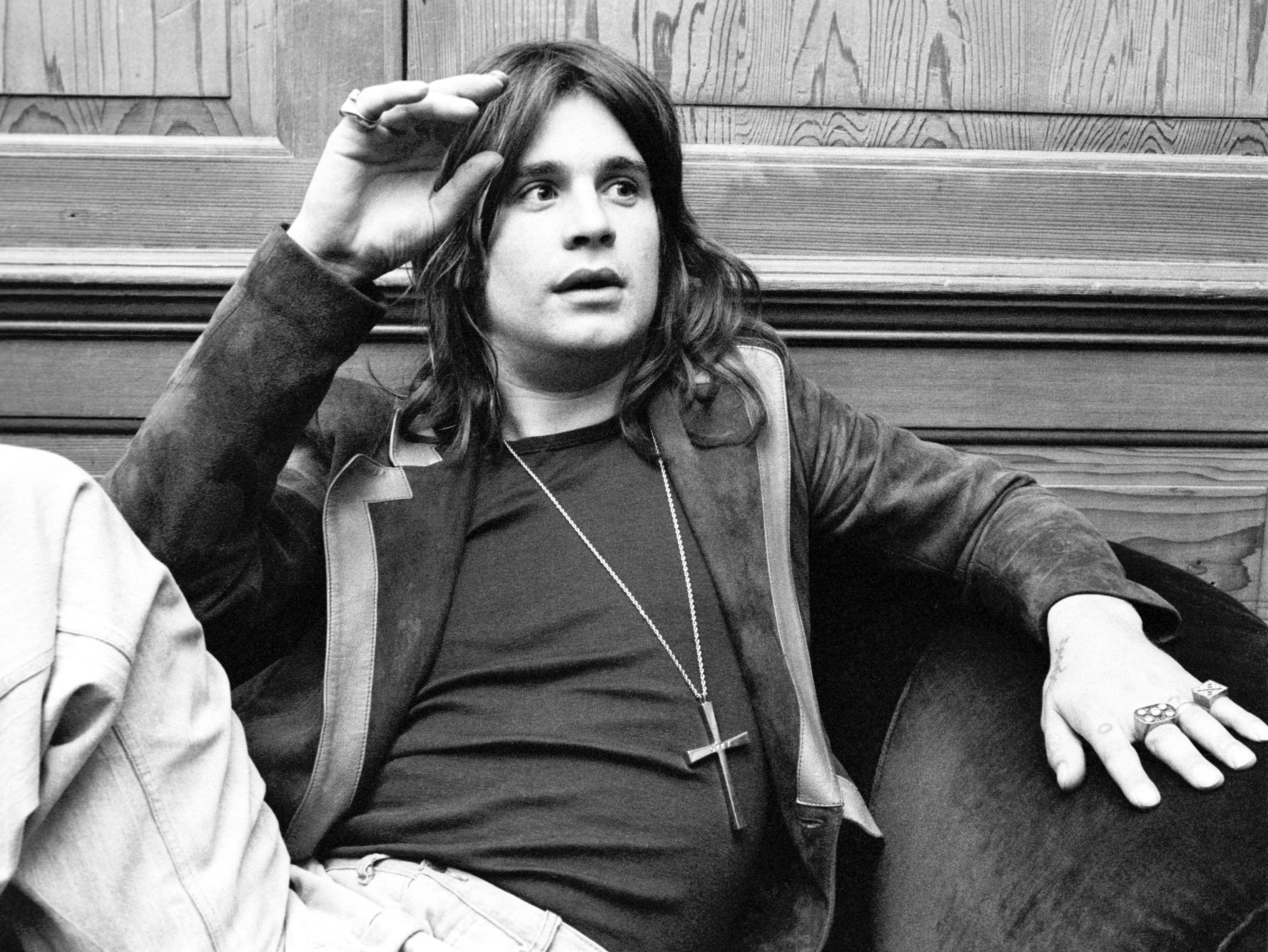
Ozzy Osbourne, in many ways, was music’s everyman—a working class entertainer in every sense of the term; never losing sight of who he was or where he came from despite his wild and ongoing success in the music industry for over fifty years.
Osbourne, who died this week at age 76 after a prolonged battle with Parkinson’s Disease, grew up in (Aston) Birmingham, England and ended up becoming one of the city’s most treasured success stories by helping found Black Sabbath and his decades-long solo career.
Famous people die all the time, some gaining more attention than others. These days it is customary for tributes to flow out on social media platforms and through more formal news sites, each sounding similar to the next until the news cycle moves onto whatever next thing arrives on the scene. As years pass we sometimes forget whether or not a particular famous person is still alive or not. Osbourne’s death feels a bit different, maybe because he spanned so many generations and eras but also because he was so well liked and admired, not so much for being wildly successful (which in many ways he was) but for just being himself.
For me, it was his voice. Pleasant? Not sure anyone would describe it that way. Beautiful? Depends on your view of the term. Good? I would argue, yes, absolutely good. That’s not really the point. Osbourne’s voice was powerful and unique and fit his style of music like a glove. More accurately, his voice forced the music to fall in line around it’s power, a nasally, at times guttural vocal that cut across any musical bridge or melody until it was unmistakable in nature. Everyone knew an Ozzy song when it was played—whether you liked it or not.
Osbourne’s music has been part of my life’s soundtrack for the last forty years, starting early in high school and more or less continuing in various fits and starts since. I have seen him live twice, ten years apart and both were memorable. The first time was in the early 1990s, on the “No More Tours” Tour (the most misleading title of all time I am betting) and he was arguably at the peak of his powers—cleaned up (mostly) from substance abuse with a great band and years of performing live under his belt. The second time, in late 2001, he was older and less menacing, more aging metal folk god than agent of darkness—playing the role of macabre showman with a wry grin and wink. Osbourne always benefitted from having a great band around him and this proved invaluable as he settled into his late career years; even if his great songs were less frequent they still sounded fantastic.
Most all of my friends liked Ozzy growing up just as I did. As years go on, we all got into different music and artists, sometimes tempted to view Osbourne as something from our youth when in reality he never left. By the time I was middle aged I realized he was incredible despite his flaws and less inspired creative efforts. Ozzy was metal’s Elvis—except he lived long enough to be an old man and actually became more likeable (wholesome, even?) as he aged. He became an elder statesman, then a mentor, then an institution. He had kids who became parents, making him a grandfather. He stayed married to his wife Sharon against all odds (mostly of his doing). He kept performing even as his peak faded, becoming more a traveling museum than dynamic and vital entertainer. But it was still great.
For all these reasons and more, Osbourne’s death feels like a true loss. He meant so much to so many and for reasons extending far beyond his songs. He felt like a regular guy even though he hadn’t lived like one in decades.
Osbourne, for all his riotous antics and knack for outrageous showmanship, was—at his core—a regular kid who rose from his industrially moribund environment to become one of the most influential and memorable performers in music history. He was a founding member of Black Sabbath—widely considered the godfathers of modern metal—and after being unceremoniously kicked out of the band (he would reunite with the band multiple times later in his career) Osbourne embarked on a highly successful solo career that lasted decades. Along the way he helped many other bands and musicians gain a foothold in the industry, ushered in an iconic music festival (Ozzfest began in 1996), was the subject of a popular family reality television show (MTV’s The Osbournes), essentially transforming himself from metal madman to everyone’s favorite Dad.
Considering his infamous history of substance abuse and addiction, Osbourne living to his late 70s is something of a win. Peering through the lens of the mid-1980s, most would have expected a much earlier demise, probably from alcohol poisoning or a drug-induced overdose. Instead, Osbourne (mostly) cleaned up his act, leaned into his family and friends and aged somewhat gracefully until his Parkinson’s diagnosis six years ago.
Very early into his professional life, Osbourne doubled down on the macabre and Satanic-tinged schtick with both Black Sabbath and during his early solo years, inviting accusations of being a devil worshipper, drinker of blood and member of the occult. It is important to remember Black Sabbath was originally named Earth but after seeing a long line outside the hotel window for the 1963 film starring Boris Karloff Black Sabbath history changed for good along with the band’s name. Horror, it was decided, was the currency of the band’s realm. Even his first few solo album covers continued this ghoulish masquerade, depicting Osbourne as both madman and devilish ringleader, the singer exhibiting some combination of crosses, blood, fangs or any other stock symbol of faux horror. The act was, for all intents and purposes, the best bait and switch in the business, generating attention both controversial and sensational—all resulting in a career that spanned many more years than most thought possible.
By 1991, however, Osbourne went in a different direction—ever subtly—with No More Tears, an album more hard rock than metal, reflecting his evolution as an artist and lyricist. The overt Satanic overtones and horror movie elements were mostly gone, replaced by soaring guitars, hard rock-fused melodic hooks and even some earnest ballads. By the 2000s, Ozzfest was in full effect, his family’s MTV reality show The Osbournes aired to millions of households each week and the Osbourne business was better than ever. He still put out solo albums with some regularity through 2022 but by this point his celebrity persona overshadowed his music.
Despite these side ventures and diverging pathways, Osbourne’s legacy is—and will always be—the music. His catalog, both as the founding lead singer of Black Sabbath and decades-long solo career, is both astounding and indelible. Black Sabbath started essentially as a rock blues band and became the foundation for modern heavy metal and hard rock. Founded the same year as Led Zeppelin in 1968, Sabbath never gained the critical or cultural acclaim Zeppelin did but in many ways did something greater—it became the People’s Champ of sorts, a working class band that stood the test of time, literally and figuratively.
Osbourne was Black Sabbath’s spirit animal, court jester and voice, his star power growing in force with every live performance (the band’s famous 1970 live performance in Paris remains one of best concerts of all time). Tony Iommi was the brooding guitar wizard, Bill Ward (drums) and Geezer Butler (bass guitar) the rhythm keepers but Osbourne was the Main Man, the force of nature tying the whole operation together. If one watches a live performance of the band focusing just Iommi, Ward and Butler it could be mistaken for a regular recording session but seeing Osbourne jump up and down, waving and clapping his hands, demanding the audience’s full participation and attention renders it an unabashed rock and roll spectacle.
Drugs and dissension (along with a heaping dose of youthful hubris) got Osbourne dumped by the band by 1979, replaced by Ronnie James Dio, a superb and elite vocalist whose immense technical prowess still couldn’t lift the band past the classic footprints set by Osbourne’s era. Osbourne put together a new band and released two solo albums in 1981, Blizzard of Ozz and Diary of a Madman. While Osbourne put out other remarkable work during his career in later years, the musical and lyrical creativity and power of those first two solo albums are unmatched. Serving as a veritable greatest hits montage, the two albums feature a wide range of musical stylings and lyrical depth (thank you, Randy Rhoads!) that remained on Osbourne’s live set lists for decades.
Osbourne did not play any musical instruments nor was he very interested in production or solo song writing but ended up having a uniquely impactful effect on his music simply through his voice. Along with his on stage persona, it was the only weapon he needed and it sustained a musical legacy that lasted for decades.
While Osbourne has always cited The Beatles as a huge influence in his creative work, his solo work showed this in actuality as more intricate, melodic ballads and mid tempo songs regularly turned up on his albums and in live concerts. While “Crazy Train”, “Shot in the Dark”, “I Don’t Know” and “Paranoid” remained larger than life for years, deeper cuts like “Diary of a Madman”, “Tonight”, “Revelation (Mother Earth)” and “So Tired” show Osbourne’s more musically introspective and alternative side. By the 2000s, Osbourne began doing numerous collaborations with artists both his age and generations younger, expanding his already vast musical influence even wider.
The Osbournes showed the zany and unconventional Ozzy and his family while also showcasing what many insiders knew for years—how naturally funny Osbourne was, like a self effacing prankster who never got past adolescence. As destructive as his behavior could be on himself and family, he never lost a sense of humor or his likeability with the public at large. In many ways, Ozzy’s flaws became to entry point to his relatability. In the excellent 1991 documentary Don’t Blame Me Osbourne speaks at length about not being worthy of his stardom, about not being good enough, about not measuring up to the other luminaries in his field. There is a video online from sometime in the 2000s of Osbourne finally meeting Paul McCartney. Ozzy’s quiet enthusiasm belies his own stardom; he’s just a star struck fan meeting one of his musical heroes. He was, in essence, just like anyone would be when meeting McCartney.
In the documentary Osbourne also discusses the fickle nature of the music industry, asserting that while he is a “headliner” and “top tier draw” the sides could switch one day and he could very well be the opener for the acts currently opening for him. While Osbourne never ceased to be the top name at any show or festival it showed his penchant for knowing who he was and what could be, a measure of introspection not commonly on display in our biggest stars.
Osbourne, at his core, was an everyday guy who became a global star but continually refused to posture himself as That Guy, instead focusing relentlessly on the show, the songs, the fans, everything but his own celebrity. This is what fans lost this week. This is what will be missed. This is why Osbourne was not just liked, not just loved but beloved. That doesn’t happen all the time and in many ways, it won’t happen quite like it did with Ozzy ever again.